An online audio engineering course can lead to exactly the same credential as studying on campus. At Musitechnic (Collège Unica), the online and in-person versions of our Sound Recording and Design A.E.C. follow the same 960-hour NNC.0S program, so the real decision is about how you learn best and what fits your life.
Here's a practical breakdown to help you decide.
What stays the same in both formats
First, the constants. The Sound Recording and Design A.E.C. (NNC.0S) is recognized by Quebec's Ministère de l'Enseignement supérieur, and the online version includes:
- The same 960 hours over 4 sessions, completed in 12 to 16 months;
- The same curriculum: foundations (audio industry, intro to DAWs, Audio Recording 101 and 201, digital audio workstation), development (Music Creation 101, Audio Mixing 101, audio post-production, music repair), specialization (Music Creation 201, Audio Mixing 201, audio for video games, career management), and projects (music production project, critical listening, post-production project, plus a final project or 45-hour internship);
- The same industry software: Pro Tools, Cubase, Ableton, Studio One and Wwise, along with FabFilter, Waves, iZotope, Native Instruments and Universal Audio tools.
Classes run in English or French depending on the cohort. What changes is the learning environment.
Studying online: pros and cons
The online program combines live classes, recorded sessions and ongoing technical and pedagogical support.
Pros
- No relocation. Study from anywhere in Canada or abroad without moving to Montreal.
- Rewatchable lessons. Recorded sessions let you replay a mixing demo or signal-flow explanation as often as you need, which is a real advantage for technical material.
- Learn where you'll work. You build skills in the home-studio setup you'll likely keep using after graduation.
Cons
- Self-discipline required. With no commute or campus schedule, protecting your study time is on you.
- Your own gear. Plan for a suitable computer and workstation, and ask admissions about technical requirements. Our home studio guide for audio students is a good starting point.
- Less hands-on time with large-format consoles and live rooms.
- Fewer spontaneous connections. You'll need to make more of an effort to build relationships with classmates and instructors, since there's no hallway or studio downtime to do it for you.
Studying in person in Montreal: pros and cons
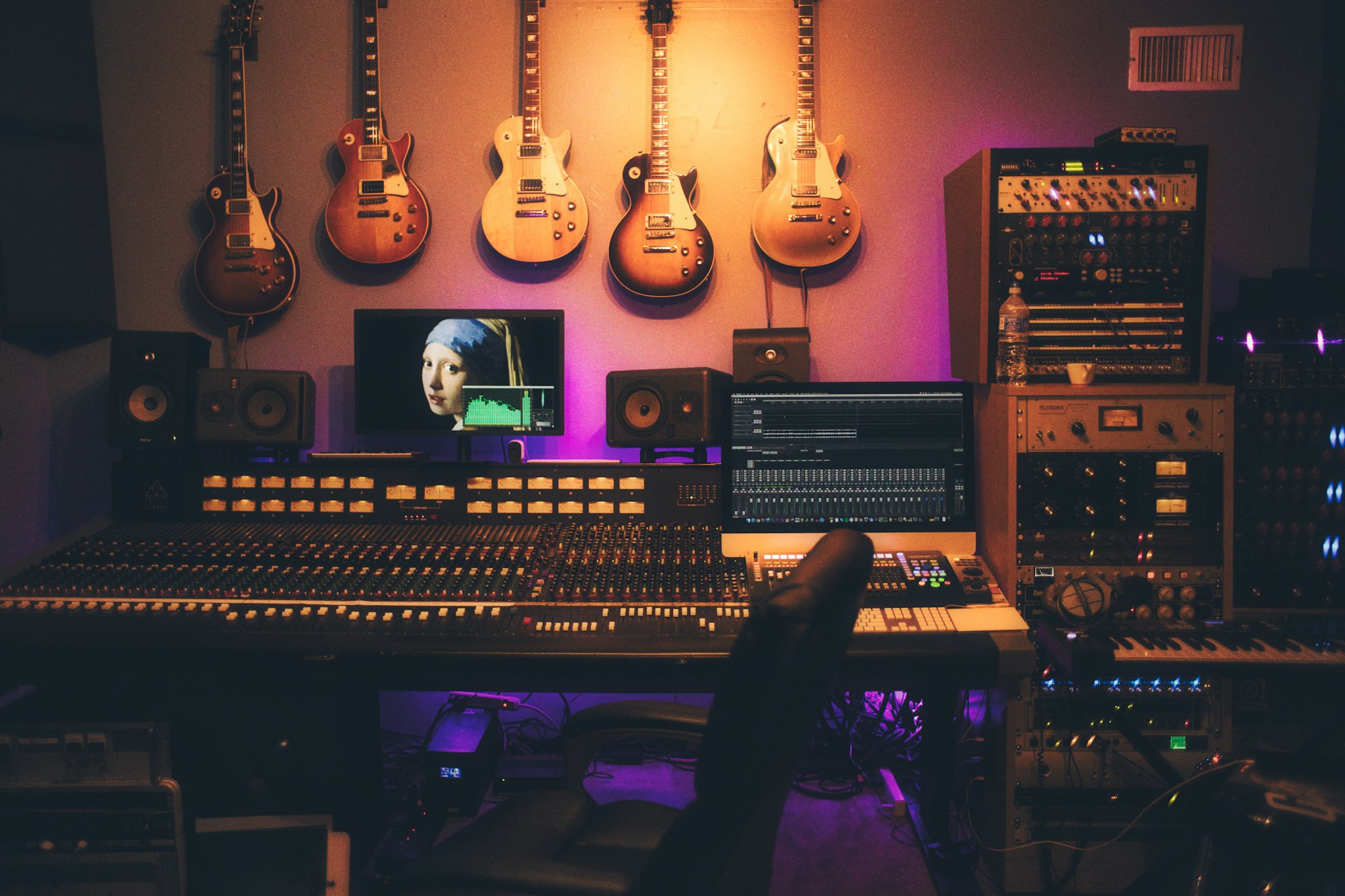
The Westmount campus at 4060 Sainte-Catherine Street West has 8 studios plus labs, equipped with SSL consoles, Pro Tools HD and Ableton Live.
Pros
- Hands on real hardware. Patching, routing, mic placement in treated rooms and console work: some skills simply stick better when you physically do them.
- Real session teamwork. You track and mix alongside classmates, the way studios actually operate.
- Immediate feedback. Instructors are right there in the room.
- Face-to-face network. Relationships built in the studio matter in this industry.
Cons
- You need to be in Montreal (or move here) and follow a fixed schedule.
- Less flexibility around work, family or other commitments.
Which format suits you?
Go online if you:
- live outside Montreal or can't relocate;
- work or have family responsibilities;
- are self-motivated and organized;
- are aiming mainly at home-studio production, music creation, post-production or remote work.
Go in person if you:
- learn best by handling equipment;
- want to work in commercial studios, track bands or run sessions on a console;
- want to build your network face to face;
- need structure and a schedule to stay on track.
Still comparing schools in general? See our overview of audio engineering schools and our look at music engineering jobs to connect your choice to your career goals.
How to evaluate any online audio engineering program
Whichever school you're considering, ask:
- Is the credential officially recognized (in Quebec, by the Ministère de l'Enseignement supérieur)?
- Is the online curriculum identical to the in-person one?
- Are there live classes, or only pre-recorded videos?
- What support is available between classes, both technical and academic?
- Which software is taught, and is it what the industry actually uses?
- Is there a final project or internship so you graduate with a portfolio?
FAQ
Is the online diploma different from the in-person one?
No. Both follow the same 960-hour NNC.0S program and lead to the same A.E.C.
Can I take an online audio engineering course while working?
That's one of the main reasons people choose online. Still, be realistic: 960 hours is a serious commitment, so plan your weekly schedule before you start.
Is financial aid available?
Ask admissions about your financial aid eligibility. You can also read our article on scholarships and financial aid (in French).
Choose with confidence
Online or on campus, you get the same program. Compare both formats on the Sound Recording and Design and online program pages, then book a visit to talk it through with our team, or go straight to Admission.
Ready to choose your format?
Online or on campus, it's the same 960-hour NNC.0S program.
Book a studio visit