The best audio engineering schools in Canada are the ones whose credential, studio access and teaching format match the career you actually want, not simply the ones with the biggest ads. Before you apply anywhere, compare programs on six concrete points: credential type, hands-on hours, equipment, delivery format, language of instruction and the real cost questions you need answered.
This guide helps you compare audio engineering programs in Canada on equal terms.
1. Understand the credential: AEC in Quebec vs. college diploma elsewhere
Education is a provincial responsibility in Canada, so the same kind of training can carry a different name depending on where you study.
- In Quebec, career-focused college training is often offered as an AEC (attestation d'études collégiales). An AEC is a recognized college-level credential focused on job skills; it is not the same as a DEC (diplôme d'études collégiales), which includes general education courses and is the usual path to university in Quebec. If you want a deeper breakdown, read our guide on AEC vs. DEC for audio training in Montreal.
- In other provinces, public colleges typically award a college certificate, diploma or advanced diploma, and private career colleges award their own credentials under provincial oversight.
What to ask: Is the program recognized by the provincial ministry or regulator? What exactly is printed on the credential? If you plan to study further later, how does the credential transfer?
2. Count the hands-on hours, not just the course list
Audio is a practical craft: you learn to mic a drum kit or fix a muddy mix by doing it repeatedly, with feedback from professionals.
When you compare a school of audio engineering, ask:
- How many total program hours are there, and how many of those happen in a studio or lab?
- Do students book studio time outside class, and how much is available per week?
- Are there supervised recording sessions with real musicians or voice talent?
- Is there a final project or an internship component?
Look for a logical progression: foundations, then mixing and post-production, then specialization, then projects.
3. Look at the gear and software you'll actually touch
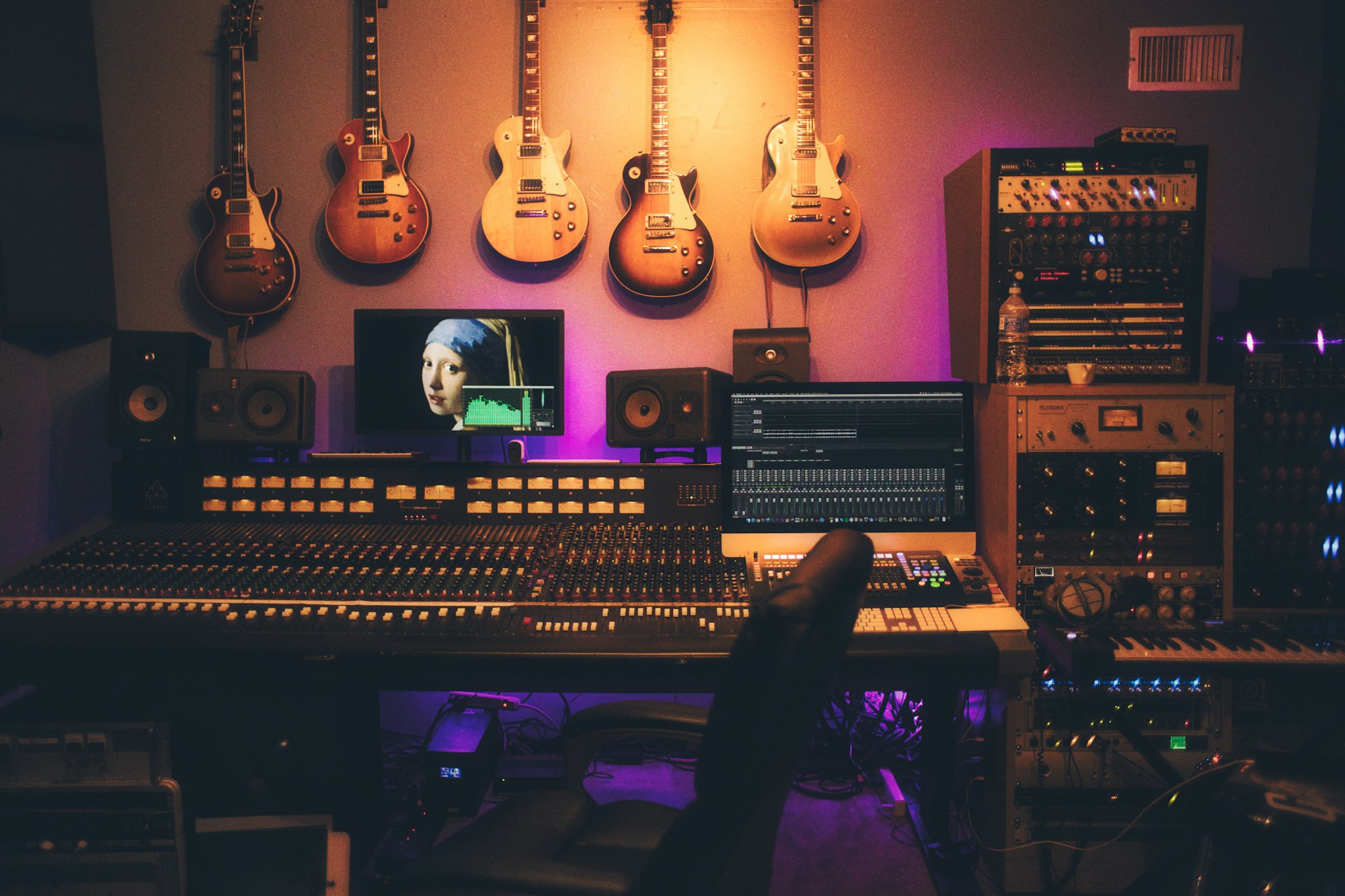
What matters is the gear students use day to day, not the brochure list:
- DAWs: Pro Tools remains a reference in recording and post-production studios; Ableton Live, Cubase, Studio One and Logic are common in production and composition. Our comparison of Pro Tools, Ableton and Logic for students explains the differences.
- Consoles and outboard: large-format analog consoles teach signal flow in a way software alone rarely does.
- Plugins: names like FabFilter, Waves, iZotope, Universal Audio and Native Instruments show up in most professional sessions.
- Game audio middleware: if you are interested in games, ask whether Wwise or similar tools are taught, not just mentioned.
Ask to see the rooms: acoustics, monitoring and studio-to-student ratio tell you more than any spec sheet.
4. Decide whether online or on-site fits your situation
Online sound engineering training in Canada has matured. A good online program can teach DAW work, mixing, editing, post-production and theory effectively, especially with live classes rather than only pre-recorded videos.
Questions to ask about an online option:
- Are classes live, recorded, or both?
- Is there technical and pedagogical support between classes?
- What home setup is required (interface, monitors, headphones, computer)? Our home studio guide for audio students is a good starting point.
- Does the online version lead to the same credential as the on-site one?
On-site training still has an edge for tracking live bands, working on large consoles and learning studio etiquette in person.
5. Check the language of instruction
In a bilingual country, language matters more than people expect. In Quebec, many programs are offered in French, some in English, and some alternate by cohort. Ask which language your specific cohort will be taught in, what language the course materials and software are in, and whether you can submit work in either language. If you want to work in the Montreal market, comfort in both French and English is a real asset.
6. Ask the right cost questions
Tuition alone does not tell the whole story. Ask each school for a written answer to:
- Total tuition for the full program, and how it is billed (per session or upfront)
- Additional fees: registration, materials, software licences, studio access
- Equipment you are expected to buy (headphones, interface, laptop)
- Financial aid eligibility; in Quebec, ask admissions whether the program qualifies for provincial aid. See our overview of scholarships and financial aid for audio AEC programs.
- Refund and withdrawal policy
For a wider comparison framework focused on Quebec, see how to compare audio and multimedia schools in Quebec.
FAQ
Do I need a credential to work as an audio engineer in Canada?
No licence is required, but a recognized credential shows structured training and can help with internships, studio jobs and employers in broadcast or post-production.
Is an AEC the same as a college diploma in Ontario or B.C.?
They are different provincial credentials. An AEC is a Quebec college-level credential focused on career skills; compare program hours and content rather than assuming they are equivalent.
Can I learn audio engineering fully online?
Yes, for much of the craft. Choose a program with live classes, ongoing support and a credential identical to its on-site version.
Explore Musitechnic's programs
Musitechnic (Collège Unica) has trained audio professionals in Montreal since 1987. Our A.E.C. in Sound Recording and Design is a 960-hour program recognized by Quebec's Ministère de l'Enseignement supérieur, offered on-site in Westmount or 100% online with live classes and continuous support. Interested in games and film? See Sound Techniques for Video Games and Film. The best way to compare is to see the studios yourself: book a visit or check the admission page.