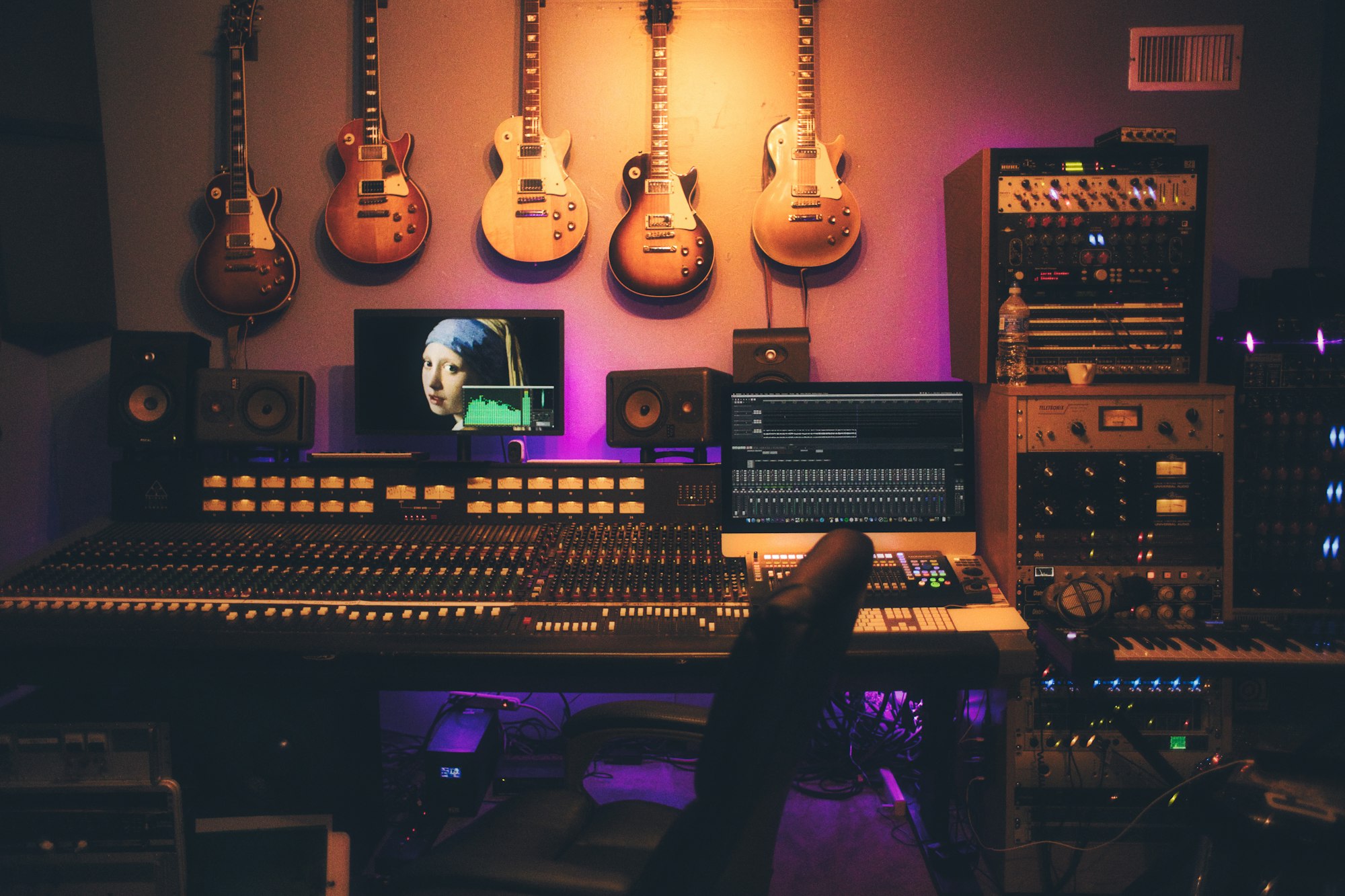
Having access to Musitechnic's professional studios is a clear advantage, but practising at home between classes makes all the difference. Here is how to set up a functional workspace without breaking the bank.
1. The audio interface
It's the centrepiece. A 2-input interface (such as the Focusrite Scarlett or Universal Audio Volt range) is more than enough to get started and generally costs between $150 and $300 CAD.
2. Studio monitors
Flat monitoring speakers (without colouration) are essential for developing a reliable ear. Avoid consumer speakers that exaggerate the bass.
3. Acoustic treatment, not isolation
Many students confuse sound isolation (keeping sound from escaping) with acoustic treatment (controlling reflections inside the room). A few absorbent panels at the primary reflection points make a huge difference for a minimal cost.
4. A reference headphone
Essential for checking a mix in a neutral environment, or for working late without disturbing the neighbours — a frequent reality in Montreal apartments.
5. The software
Pro Tools remains the industry standard and is what we teach at Musitechnic, but alternatives like Ableton Live or Logic Pro are useful to know, especially for music production. Our instructors often recommend replicating, even modestly, the signal flow of the school's studios — it considerably accelerates learning.
Practise on professional gear
Discover our professional studios and AEC programs in Westmount.
View Program