Audio post production is everything that happens to a film or TV show's sound after the picture is edited: cleaning and editing dialogue, replacing lines with ADR, recording Foley, building sound effects, placing music and mixing it all into final deliverables. It's where a rough location recording becomes the immersive soundtrack audiences actually hear.
Here's how the workflow usually unfolds, stage by stage, and what each role contributes.
Where audio post fits: spotting and turnover
The process typically starts once the picture edit is "locked," or close to it. The editor exports an AAF or OMF with the production audio, plus a reference video. The sound team then holds a spotting session with the director and picture editor to discuss intent: where sound should lead the story, where silence matters, where music comes in and which lines may need replacing.
From there, the work splits into parallel tracks handled by different specialists, all converging in the final mix. Most of it lives in Pro Tools, still the standard DAW in post.
Dialogue editing and ADR
Dialogue is the priority in almost every project. If the audience can't follow the words, nothing else matters.
Dialogue editing means going through every line recorded on set: choosing the best microphone (boom or lav), swapping in alternate takes where a word is clearer, smoothing room tone between cuts so edits are invisible, and removing clicks, rustles and background noise. Spectral repair tools such as iZotope RX have become essential here, but a good dialogue editor's ears are still the main tool.
ADR (Automated Dialogue Replacement) is used when a line can't be saved: a plane flew over, the actor's performance changed, or the script was rewritten. The actor re-records the line in a studio while watching the scene, matching lip movements and emotion. The dialogue editor then fits ADR so it blends with the surrounding production sound.
Foley: performing sound to picture
Foley artists perform everyday sounds in sync with the picture: footsteps, clothing movement and handled props. Production audio rarely captures these cleanly, since the set was mic'd for dialogue. Foley gives characters physical presence, sells the weight of objects and fills in what the location track missed.
Foley also matters for international versions. When dialogue is removed for dubbing, every sound that was riding on the production track disappears with it. A full Foley pass keeps the M&E (music and effects) track complete. For a deeper look at the craft, read our article on Foley in film and television.
Sound effects and sound design
The sound effects editor builds the non-performed world of the film: cars, doors, weather, crowds, weapons and backgrounds (ambiences). These come from sound libraries, field recordings and custom design.
Sound design goes further, creating sounds that don't exist in reality or need to carry emotion: a creature, a spaceship, a stylized impact, an unsettling drone. Designers layer, pitch, process and sculpt material until it serves the story. Ambiences deserve special mention: a well-built background tells you where and when you are before anyone speaks.
Music
Music arrives in two forms: an original score written for the project and licensed or source songs. A music editor fits cues to picture, edits them to new cut lengths and prepares stems so the mixer can balance elements individually. Music and effects must leave room for dialogue and for each other, which is a constant negotiation in the mix.
Film sound mixing and deliverables
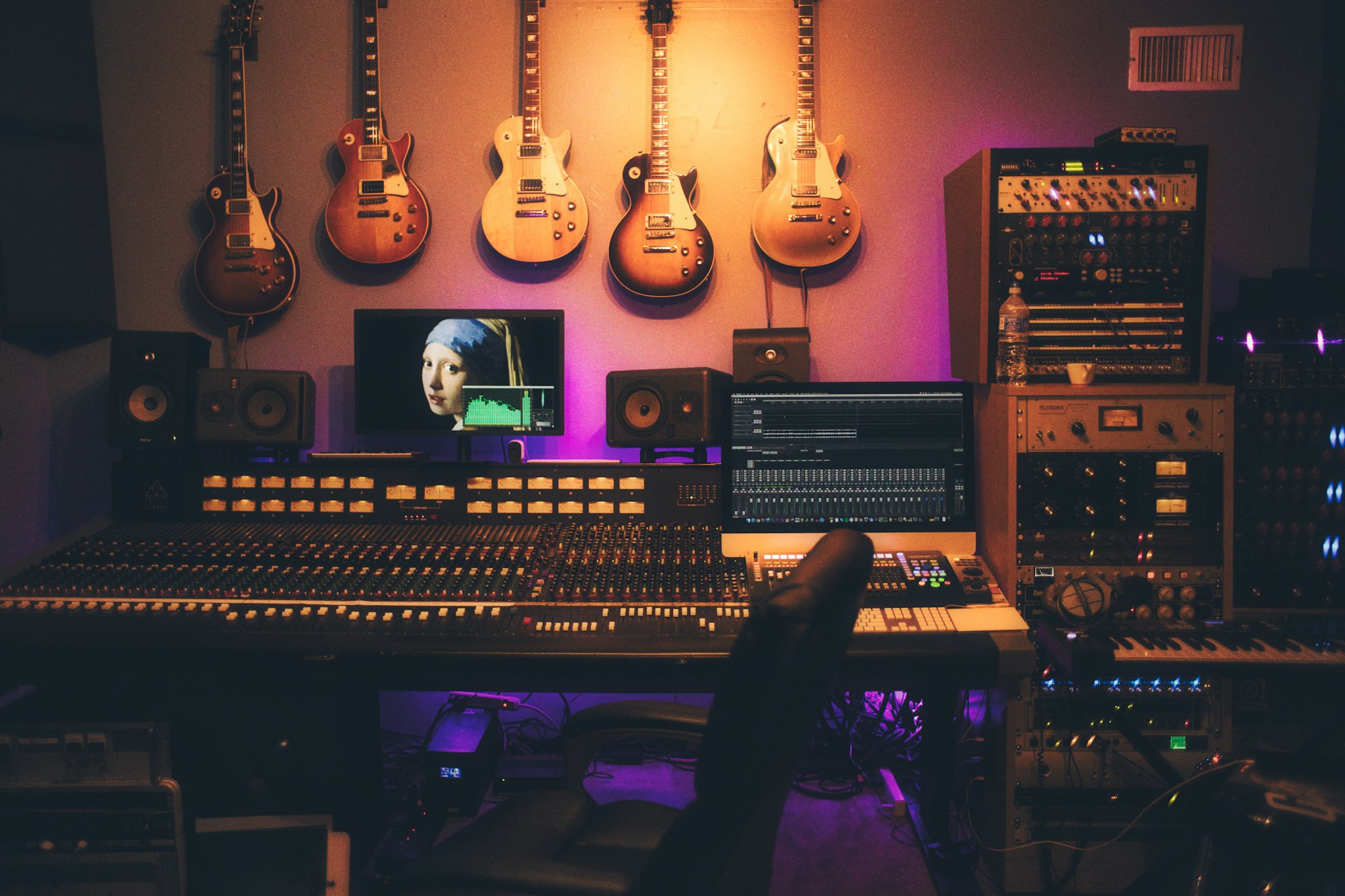
Film sound mixing, or re-recording mixing, brings dialogue, Foley, effects and music together. It's usually done in a calibrated room that reflects the final playback environment: a theatre for cinema, a near-field setup for streaming and broadcast. Mixers set levels, EQ, dynamics, reverb and panning, often in surround or immersive formats, and make sure the result meets loudness specs for the target platform.
Then comes the paperwork side: deliverables. A typical package includes the full mix in the required formats, plus stems, separate submixes of dialogue, music and effects, and the M&E. Broadcasters and streaming platforms publish detailed technical specs, and delivering exactly to spec is part of the job.
Learning audio post in Montreal
At Musitechnic (Collège Unica), the Sound Techniques for Video Games and Film A.E.C. is a 16-month on-site program focused on sound for picture. The Sound Recording and Design A.E.C. includes an Audio Post-Production course and a Post-Production Project in its final session, and is also offered 100% online. On campus, students work in 8 studios with Pro Tools HD and SSL consoles.
FAQ
What's the difference between Foley and sound effects?
Foley is performed in sync with the picture by an artist (footsteps, cloth, props). Sound effects are usually edited in from libraries or field recordings, such as cars, explosions or ambiences.
Why not just use the sound recorded on set?
Production audio is optimized for dialogue. Other sounds are often weak or off-mic, and noise or performance changes can make lines unusable, which is why post adds ADR, Foley and effects.
What are stems in film sound?
Stems are separate submixes, usually dialogue, music and effects, delivered alongside the full mix so distributors can create alternate versions, such as dubbed or edited cuts.
Start building your post-production skills
Interested in sound for film and TV? Explore the Sound Techniques for Video Games and Film program, visit the Admission page, or book a campus tour to see our studios.