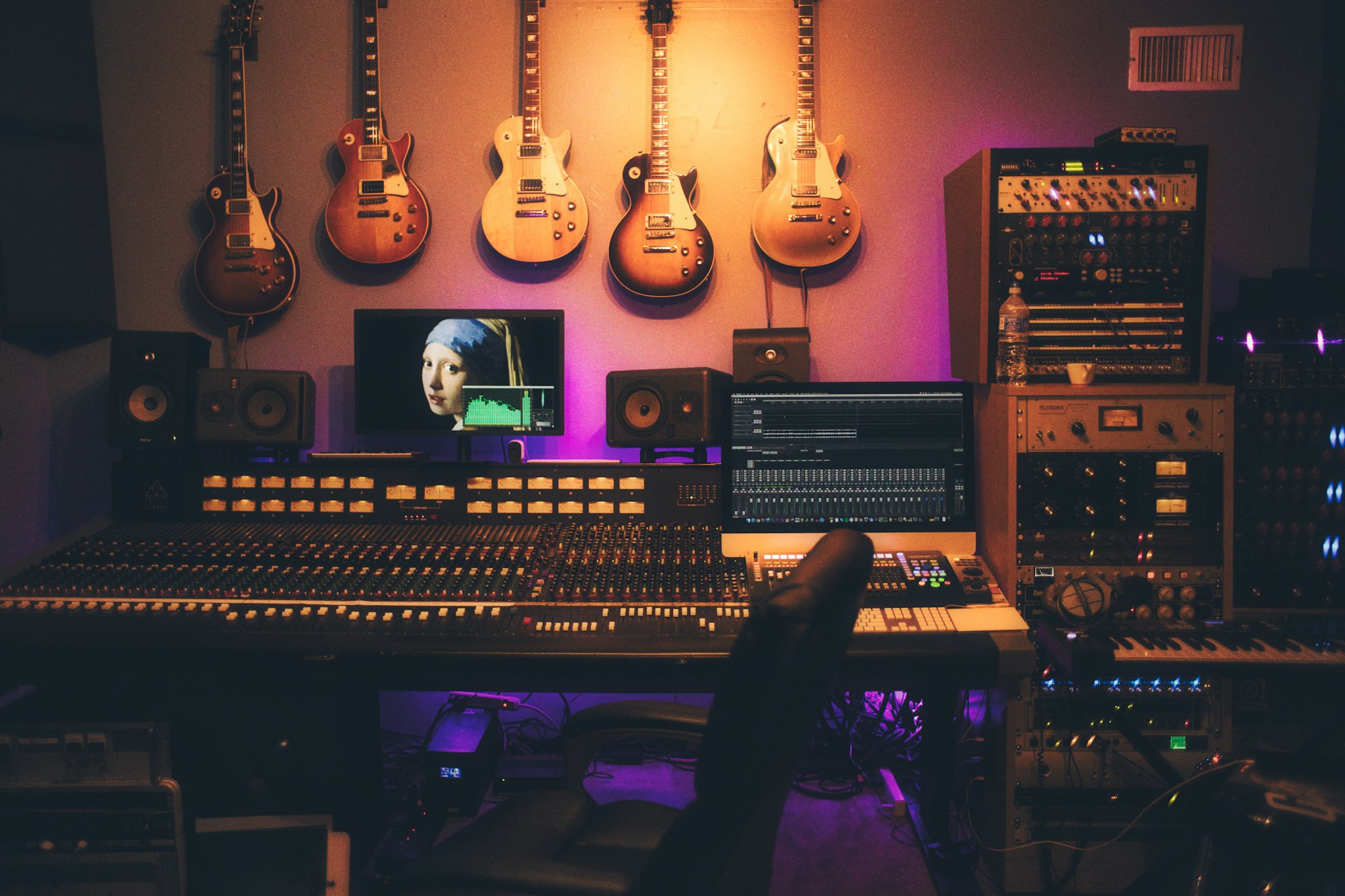
Soundproofing stops sound from getting into or out of a room; acoustic treatment controls how sound behaves inside it. They solve completely different problems, which is why a wall full of foam won't keep your neighbours happy, and a brand-new double wall won't make your mixes translate.
If you're setting up a home studio, getting this distinction right is the difference between money well spent and money wasted. Here's how each one works, what to prioritize, and when it's worth calling in a professional.
Soundproofing: mass, decoupling and airtightness
Soundproofing (or sound isolation) is about reducing transmission between spaces. Sound travels two ways: through the air, via gaps and leaks, and through the structure, as vibration carried by studs, joists, floors and ductwork. You fight it with three tools:
- Mass. Heavy, dense surfaces resist sound. That's why isolation builds add extra layers of drywall, often with a damping compound sandwiched between them.
- Decoupling. Physically separating surfaces so vibration can't travel straight through: resilient channel, isolation clips, staggered-stud or double walls, floating floors, or the full "room within a room."
- Airtightness. If air can get through, so can sound. A hollow-core door, a gap under the door, an unsealed outlet box or an HVAC vent can undo an otherwise solid wall.
The takeaway: acoustic foam does almost nothing for isolation. It's too light and porous. Soundproofing is construction, not decor.
Acoustic treatment: controlling sound inside the room
Treatment doesn't keep sound in. It makes what you hear accurate. An untreated room adds early reflections, flutter echo and low-frequency buildup that colour your monitoring, so a mix that sounds great at home falls apart in the car or on earbuds.
The core tools:
- Absorption. Thick panels of rigid mineral wool or fibreglass at the first reflection points (side walls and ceiling between you and the speakers) clean up the stereo image and tighten transients.
- Bass traps. Low frequencies pile up in corners. Deep traps in vertical corners and wall-ceiling junctions smooth out the peaks and nulls that make bass unpredictable, often the biggest issue in small rooms.
- Diffusion. Instead of soaking up energy, a diffuser scatters it, keeping a room lively without distinct echoes. It works best on the rear wall in rooms with enough depth. If you're handy, see our guide to building DIY acoustic diffusers on a budget.
Room acoustics matter for recording too, not just mixing. Our article on room acoustics for tracking and intelligibility covers how the space shapes vocal and instrument takes.
Home studio soundproofing vs treatment: what to do first
Most home studios run on tight budgets, so order matters:
- Name the actual problem. Is outside noise ruining takes? Are you bothering people next door? Or do your mixes just not translate? The first two are isolation problems; the third is a treatment problem.
- Seal the air gaps. Weatherstripping, a door sweep and sealed penetrations are cheap and often surprisingly effective.
- Treat the room. Bass traps in the corners, absorption at first reflections, then diffusion if space allows. For producers working at moderate volume, this delivers the biggest improvement per dollar.
- Set up your monitors properly. Symmetrical placement, an equilateral triangle, speakers off the back wall and at ear height. It's free and it matters.
- Build last. Solid-core doors, double walls and floating floors work, but they're expensive and often off the table in a rental.
When to hire an acoustic engineer
An acoustic engineer or acoustics consultant earns their fee when the stakes go beyond DIY:
- You're building or renovating a dedicated room and want the structure right the first time.
- You have noise obligations to neighbours, a landlord or a municipal bylaw.
- You're opening a commercial studio where clients expect a neutral, trustworthy listening environment.
- You've already treated the room, yet low-end problems persist and your measurements don't add up.
A professional measures the room, models its modes and specifies targeted fixes instead of more panels placed by guesswork. For simpler projects, a measurement mic and free analysis software are a great way to learn what your room is doing before you spend anything.
Training your ears and your judgment
Reading a room is a core sound-engineering skill. At Musitechnic (Collège Unica), the Sound Recording and Design A.E.C. covers recording, mixing and critical listening across 8 studios at our Westmount campus, with SSL consoles and Pro Tools HD. The program is also available 100% online with live classes, which makes setting up a well-treated room at home even more worthwhile. Our home studio guide for audio students is a good companion read.
FAQ
Does acoustic foam soundproof a room?
No. Foam absorbs some mid and high-frequency reflections, but it lacks the mass and airtightness needed to block sound between rooms.
What should I buy first for a small home studio?
Usually bass traps for the corners and broadband absorption at the first reflection points, combined with careful monitor placement. That's what improves monitoring accuracy most.
Can I soundproof a rented apartment?
Partly. Sealing the door, adding heavy removable panels and isolating gear from the floor help, but real isolation requires structural work your landlord would need to approve.
Learn it hands-on
Want to understand acoustics, recording and mixing with professional tools? Explore the Sound Recording and Design program, check the Admission page, or book a campus visit to see our studios in person.