Sound design is the craft of creating, recording and shaping sounds so they communicate something, whether that's a feeling in a song, tension in a film scene, feedback in a video game or a confirmation tone in an app. A sound designer doesn't just find a noise that fits; they build sounds with intention, so the audience understands and feels what's happening.
Below, we look at where sound design shows up, the core techniques professionals rely on, and what a good sound design course should teach you.
Sound design is bigger than explosions
Ask most people about sound design and they'll picture blockbuster explosions. That's part of it, but the field is much wider. Sound design covers any work where you choose, create and shape sound for a specific purpose: the night-time hum of a city, a creature's growl, the tap of a phone keyboard, the evolving pad in a synth-pop track.
What ties it all together is intent. Every sound should be believable in its world, clear in the mix and consistent with the rest of the project. Good sound designers think like storytellers as much as engineers.
Where sound designers work
Music
Producers design their own sounds all the time: synth basses, hybrid drums, risers, textures and transitions. In electronic music, hip-hop and modern pop, the sound itself is often the hook. Synth programming and creative processing are everyday production skills.
Film and TV
In post-production, sound design sits alongside dialogue, Foley and music. Designers build ambiences, hard effects and "impossible" sounds such as spaceships, magic or monsters, then sync everything to picture. For more on that path, see our post on audio post-production careers in film and TV.
Video games
Game audio has to react to the player. Designers prepare multiple variations of each sound and integrate them with middleware like Wwise, which handles triggers and real-time parameters. Our guide to the NNC.0N game audio program covers this specialization in depth.
UI and product sound
Notifications, start-up chimes, payment confirmations and car alerts are tiny sounds with big constraints. They need to be recognizable, pleasant on repeat and understandable without looking at a screen.
Core sound design techniques
Layering
Big sounds are rarely a single file. A cinematic impact might stack a low sub thump, a mid-range crack, high-frequency debris and a reverb tail. Each layer owns its part of the frequency spectrum; you then balance level, EQ and timing until they read as one sound.
Synthesis
Synthesizers (subtractive, FM, wavetable, granular) let you build sounds from scratch. They're ideal for sci-fi, interfaces, drones and musical textures. Instruments from developers like Native Instruments are common tools for this work.
Field recording
Capturing real-world sounds, like a rainy alley, a heavy steel door or a busy market, adds realism that's hard to fake. Microphone choice and placement make a huge difference; our comparison of stereo microphone techniques is a solid primer.
Processing
This is where raw recordings become something new. Time-stretching, pitch-shifting, filtering, distortion, reversing and reverb can turn a snapped branch into the creak of a ship's hull. Plug-in suites from FabFilter, iZotope and Waves cover the EQ, dynamics and repair work you'll lean on daily.
What to look for in a sound design course
Not every sound design course prepares you for real projects. Look for a program that offers:
- Strong fundamentals: recording, editing, mixing and critical listening, not just plug-in presets.
- Industry-standard tools: Pro Tools, Ableton Live, Cubase or Studio One, plus Wwise if games interest you.
- Range: music, post-production and game audio, so you can find your niche.
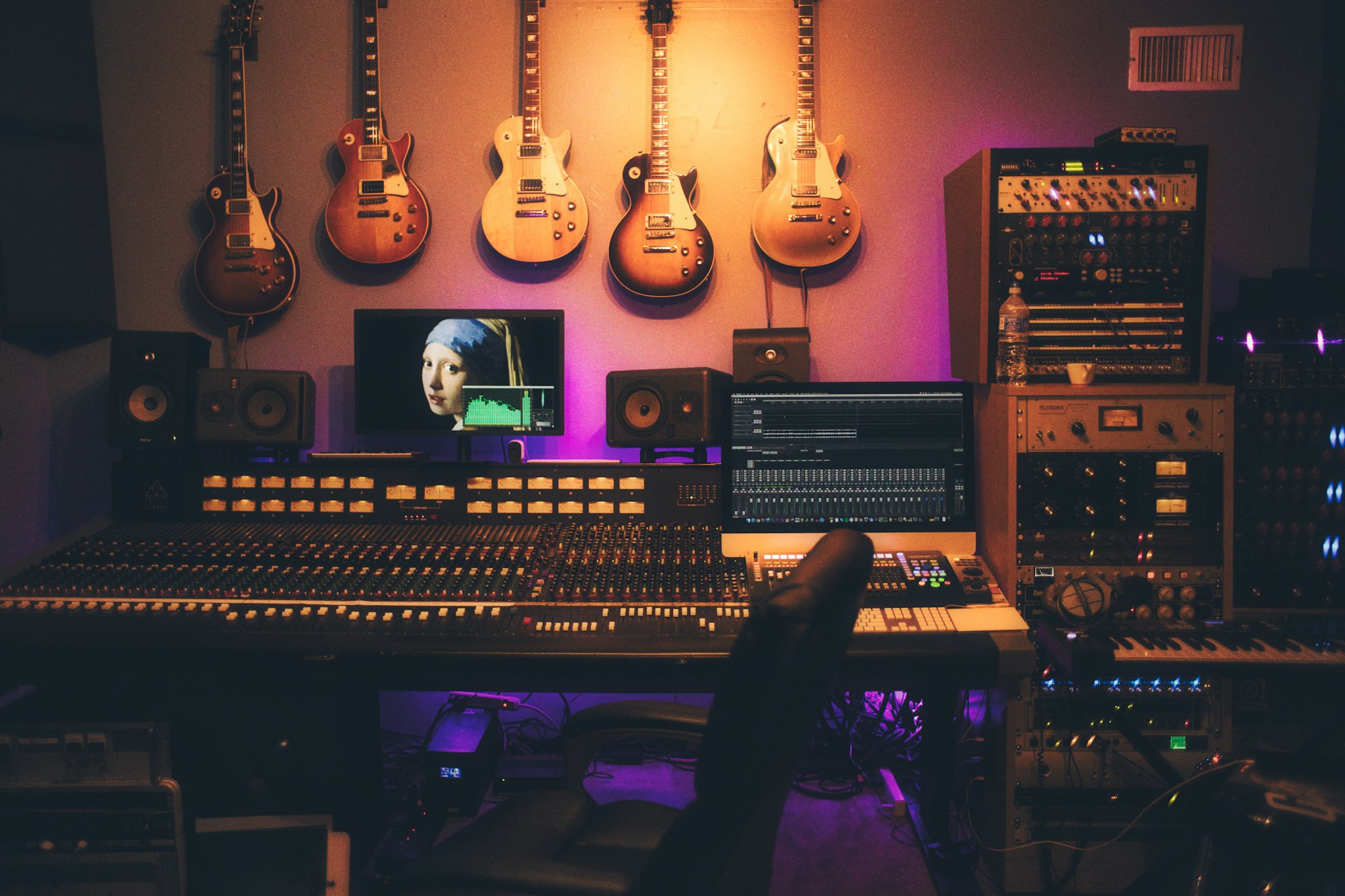
- Real studio time: hands-on work with professional consoles and acoustically treated rooms.
- Projects and practical experience: a portfolio, and ideally an internship option.
If you're still weighing formats, our article on AEC vs. DEC audio training in Montreal explains the difference between program types in Quebec.
Studying sound design at Musitechnic | Collège Unica
Musitechnic has trained audio professionals in Montreal since 1987. Our Sound Recording and Design (NNC.0S) program is an A.E.C. recognized by Quebec's Ministère de l'Enseignement supérieur: 960 hours across 4 sessions, covering recording, mixing, music creation, audio post-production and Audio for Video Games, ending with a final project or a 45-hour internship. You can take it on-site in Westmount or 100% online, with live classes, recorded sessions and continuous technical and pedagogical support.
On campus, students use 8 studios plus labs with SSL consoles, Pro Tools HD and Ableton Live. If games and film are your main goal, also look at Sound Techniques for Video Games and Film (NNC.0N), a 16-month on-site program.
FAQ
Is sound design the same as audio engineering?
They overlap but aren't identical. Audio engineering focuses on capturing and mixing sound accurately; sound design focuses on creating and shaping sounds for creative or functional purposes. Most professionals need both skill sets.
Do I need to be a musician to become a sound designer?
No. Musical training helps, especially in production, but listening skills, curiosity and command of your tools matter more.
Can I take a sound design course online?
Yes. The NNC.0S program is available 100% online with live classes and ongoing support. A decent listening setup at home helps a lot; see our home studio guide for audio students.
Start building your sound
If sound design is where you want to go, explore Sound Recording and Design, check the Admission page and see our studios for yourself: book a campus visit. For questions about financial aid eligibility, get in touch with admissions.