An audible noise floor — whether low-frequency 60 Hz hum, electromagnetic 120 Hz bzz, thermal preamp hiss, or ground loops — degrades mixing precision and clarity. Methodically isolating noise sources along an analog and digital signal path is a core engineering discipline. Understanding signal-to-noise ratio (SNR) and gain staging enables engineers to maintain quiet recordings without relying on destructive noise gate plugins.
Types of studio noise: hum, buzz, hiss, and hash
Unwanted noise in a signal chain falls into four distinct physical categories:
60 Hz Ground Hum / 120 Hz Electrical Buzz: Induced by ground loop voltage differences between interconnected equipment or AC mains transformer coupling. Balanced XLR cables and proper single-point studio grounding eliminate ground loops.
Thermal Preamp Hiss: High-frequency Gaussian noise generated by electron agitation in active preamp transistors, especially when low-output dynamic mics require high gain (+60 dB).
Electromagnetic Interference (EMI/RFI): High-frequency hash and buzz radiated by switching power supplies, LED light dimmers, or mobile phone radios into unshielded guitar pickups or unbalanced audio cables.
Step-by-step isolation protocol: half-split troubleshooting
When noise is detected on a recording channel, avoid adjusting multiple knobs at once. Execute a systematic half-split isolation protocol:
Step 1: Mute monitor speakers or lower headphone volume to protect hearing. Step 2: Unplug the microphone cable from the preamp input and insert a shorted XLR dummy plug. If hiss or hum disappears, the noise originates in the cable, microphone, or acoustic environment. If noise remains, the origin is the preamp or converter. Step 3: If noise originates before the preamp, re-attach the cable without the microphone. If noise returns, the cable shielding or routing near power cords is at fault. Step 4: Plug the microphone back in. If hum occurs, check for phantom power ground faults or directional EMI radiation.
Worked studio example: eliminating guitar amp hum in tracking
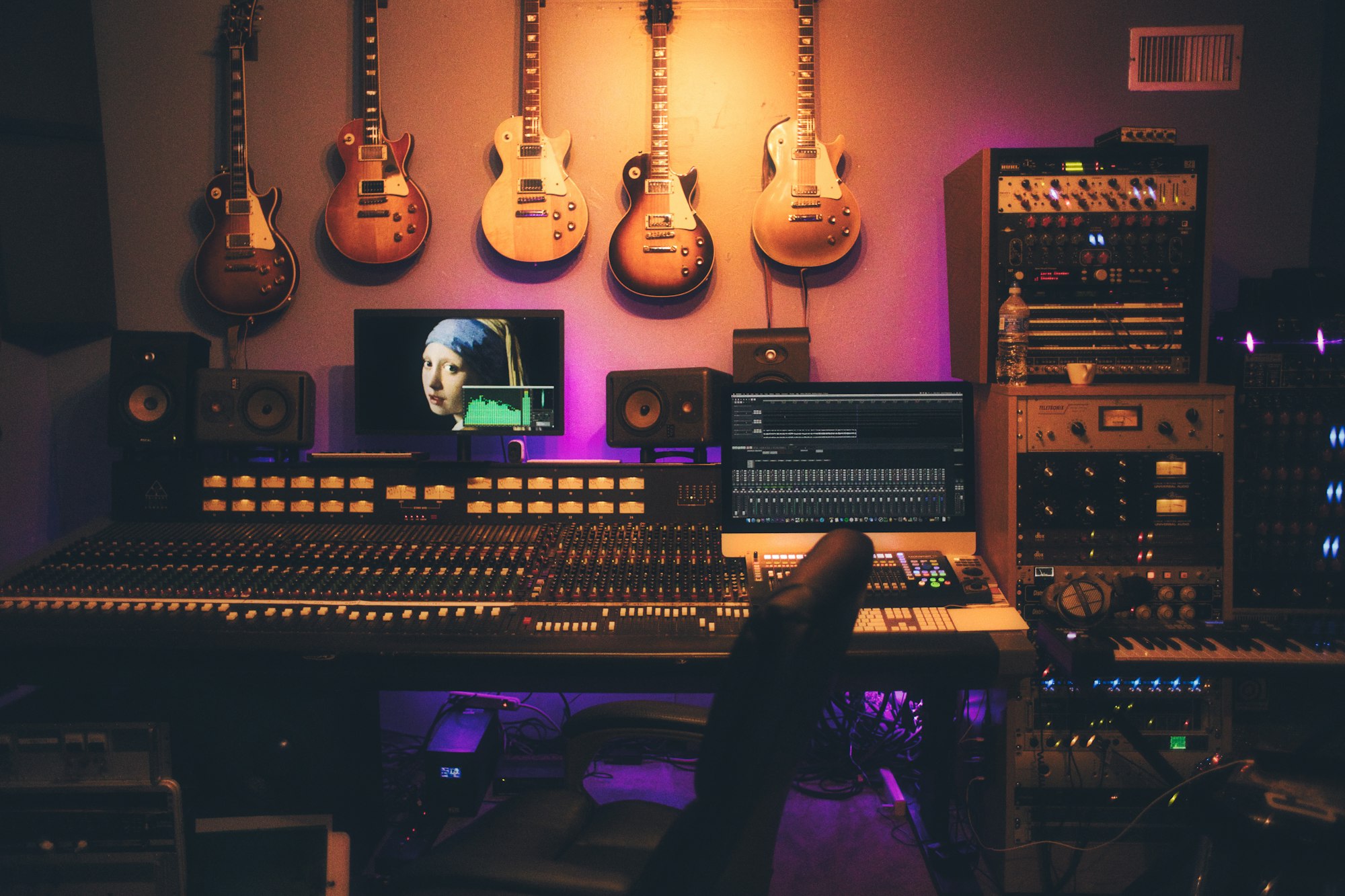
Imagine tracking an electric guitar amp in a Westmount studio suite where a high-gain tube amplifier produces loud 120 Hz buzz through a dynamic mic.
Applying the isolation protocol: First, disconnect the guitar from the amp input; if buzz drops by 80%, the noise is picked up by single-coil guitar pickups, not the amplifier circuit. Orient the guitarist 90 degrees away from the amp transformer and computer monitors to find the null orientation. Second, replace the unbalanced 1/4-inch guitar cable with a shielded cable. Third, connect both the amplifier and pedalboard power supplies to the same AC power conditioner strip to eliminate ground loops.
Signal chain noise isolation checklist
- Power all interconnected audio gear from a single AC circuit conditioner.
- Keep audio signal lines orthogonal (90 degrees) when crossing AC power cords.
- Use balanced XLR and TRS cables for all line-level and mic-level connections.
- Verify cable shield continuity using a dedicated cable tester.
- Rotate single-coil instruments to find electromagnetic radiation nulls.
- Consult AES grounding guidelines and manufacturer signal-to-noise specifications.
Common noise troubleshooting mistakes
A dangerous mistake is using ground-lift adapters ("cheater plugs") on AC power cords to break ground loops; removing safety grounds creates a severe electrocution hazard. Another error is relying on digital noise-reduction plugins during mixing instead of fixing cable or grounding faults at tracking. Finally, chaining multiple unbalanced pedals without an isolated power supply introduces ground hum into the preamp.
Next steps in signal path optimization
Test your studio cables with a cable tester and audit your power outlets to ensure single-point grounding. To master professional signal flow, console patchbays, and hardware troubleshooting in Westmount facilities, explore our sound recording and design program.
Master studio signal flow and hardware troubleshooting
Train on SSL consoles, patchbays, and analog hardware in Westmount.
Book a studio visit